How a thesis on automating discovery led to my one private investment.
read_me.txt
Hi, I’m Charlie.
I build early, across crypto, consumer, and enterprise. Now I'm moving from building companies to backing them.
Fell down the crypto rabbit hole in 2015 while at Stanford, joined the early team at Tezos, on the founding team at Callin (acquired by Rumble) with David Sacks, then founder of Pong, an enterprise AI company I bootstrapped and built solo. I earned a B.S. with Honors in Science, Technology, and Society from Stanford and live on the technological frontier.
Eagle Scout. National swim record. Two-sport student-athlete at Stanford. Talked Jimmy Buffett into his first Bitcoin in 2017. Lived in Florence, Paris, and NYC. Now back home in San Francisco.
Chapter 1 · East Bay kid
Chapter 1
East Bay kid
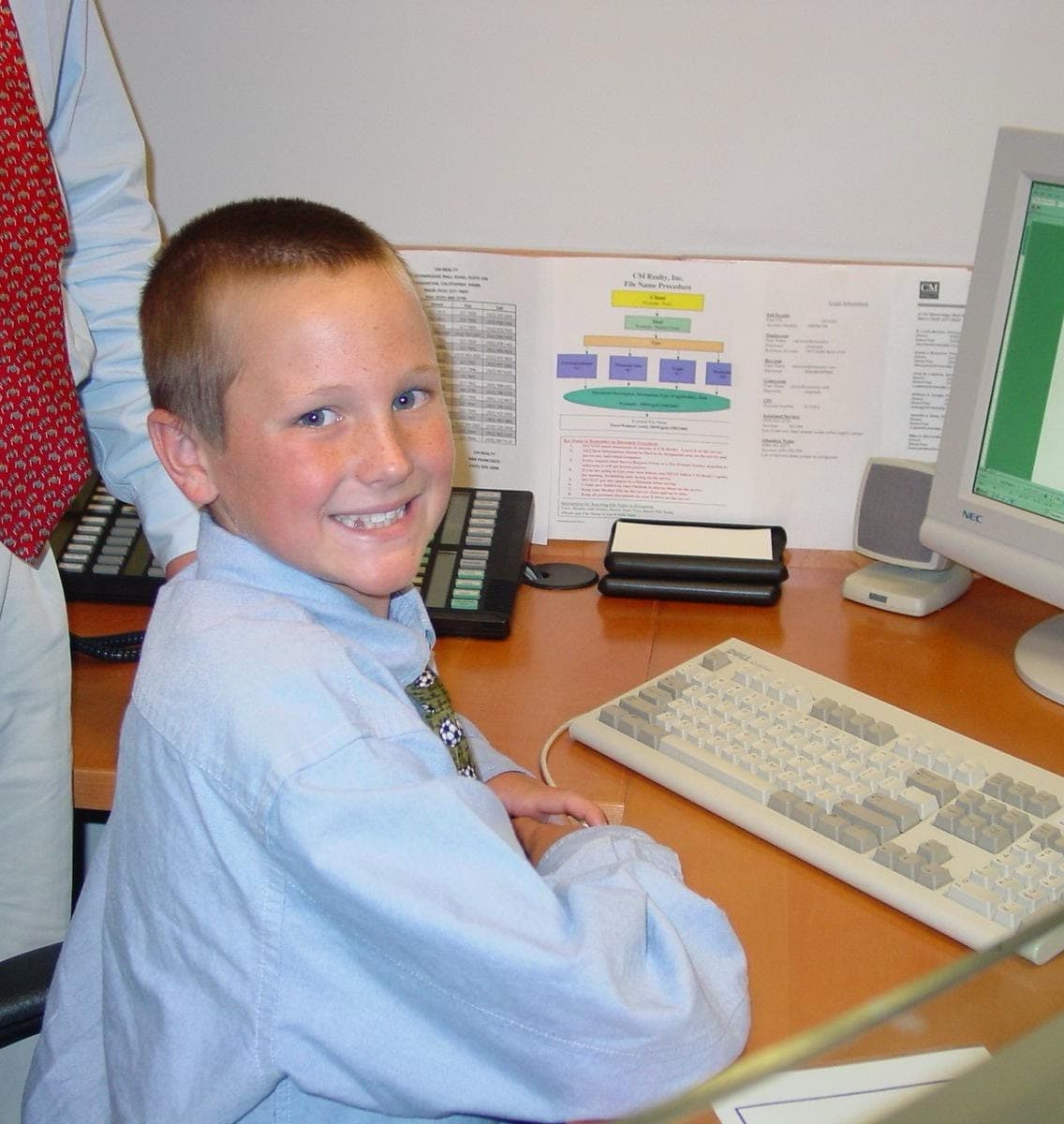
I'm a fifth-generation Californian, born in Berkeley and raised just east in Orinda, close enough to the water that I was in it early. I was also the kid who needed the newest gadget before anyone else knew it existed; my parents called me "gear guy," and it stuck because it fit. Some of that energy went into a controller, too. I played a lot of video games through middle and high school, competitive enough to reach a rank of 49 out of 50 on Team Slayer in Halo 3. Being early to new things started as a hobby, long before it became anything else.
Chapter 2
Cub Scout to Eagle
Eagle Scout court of honor
Scouting: a camp or backpacking trip
I joined Cub Scouts in second grade and stayed all the way through to Eagle. Scouting gave me a lot along the way: merit badges across dozens of subjects, summer camps, backpacking, whitewater rafting, and the run of the outdoors. What shaped me most was the Eagle project. I had to plan it, line up the materials, and lead a crew of other scouts to build a bench and a retaining wall at the Orinda Senior Village. It was the first time I owned something end to end, a plan and an execution and a team to run it with, at an age when most of that is usually done for you. Two things stuck: I liked building, and I liked doing it in service of the people and community around me. I still hold the Scout Oath, Law, Motto, and Slogan close; they were the first operating principles I had, and most of the ones I've picked up since rhyme with them.
Chapter 3
The pool
Charlie swimming or playing water polo
Young Charlie and Genevieve (prom era)
For a long stretch, my life was in the water. I swam and played water polo at Miramonte and captained both, first as a junior, which meant leading the team a year earlier than most people get to. Swimming was where the bigger thing happened: I broke a national high school record in the 100 breaststroke, and for a while the Olympics stopped sounding like a fantasy and started sounding like a plan. At graduation I received the Principal's Award and spoke to my class. Senior year was also when Genevieve asked me to her junior prom; now we're married. And true to form, I was tracking all my training on a first-generation Jawbone UP, the one you synced through the headphone jack, back when almost nobody wore a computer on their wrist.
Chapter 4
Stanford
Stanford years
Study abroad in Florence
I went to Stanford to keep chasing that plan, on a swim scholarship, playing water polo too. Two sports at once is a lot, more demanding physically and mentally than anything I'd done. Then, junior year, both hips gave out, torn labrums, one surgery and then another, and the Olympic dream I'd built my life around quietly closed. Telling my coach I wouldn't be back for my senior season was one of the hardest calls I've ever made; for a while I felt like I'd lost, like the years and the sacrifices had all been for nothing.
It turned out to be one of the best things that ever happened to me. The thirty hours a week the pool had taken were suddenly mine, and I spent them on everything being an athlete had crowded out. A History of Science course I took at the Galileo Museum in Florence, while studying abroad and living with a nonno and nonna who didn't speak a lick of English, grew into my honors thesis: an argument that the modern computing era is the third great wave of automation, after Classical Antiquity and the Industrial Revolution. Recovering with time on my hands, I also fell down the crypto rabbit hole, and put early conviction behind Bitcoin and Ethereum. I made friends from Shanghai, Kuala Lumpur, and Istanbul, whole worlds I'd never been near inside an athlete's schedule. I've stayed close to Stanford in the years since, interviewing undergraduate applicants and serving on our class reunion committee, which helped raise more than $1.1M. I learned more in those two years than in all the ones I'd spent swimming laps, and I came away believing something I still hold: that what matters most is whether you keep growing.
Chapter 5
Down the crypto rabbit hole
Tezos era, Paris
Charlie speaking at a crypto conference
On calls I still put it simply: I fell down the crypto rabbit hole, then went to work for a project called Tezos. What actually happened is that I'd been writing about the space, and my writing caught the eye of the Tezos founders, who offered me a job. The summer before, I'd had my first look at venture from the inside, interning at Chengwei Capital in China, briefing its founder, Eric Li, on crypto, and representing the firm at the 2017 Global Blockchain Summit in Shanghai; it left me wanting to build first, so that one day I could back founders as someone who had actually sat in their seat. Being early also led to some unlikely conversations: in 2017 I talked Jimmy Buffett into buying his first Bitcoin, and later advised him and the Margaritaville team on their early NFT projects. At Tezos I was the first team member at the foundation, helped launch the network while living with the founders in Paris, and ran the grantmaking program that put millions of dollars into the ecosystem. I was also on the founding team of TQ Tezos, our US entity, where I worked on business development and go-to-market and helped educate policymakers on Capitol Hill about crypto and blockchain, before eventually becoming chief of staff to the CTO. Genevieve and I moved to New York in October 2019 for the work. Around the same time, in 2019, I made my first direct investment in a technology startup, a robotic cloud lab automating scientific experimentation, a thesis-driven bet that grew straight out of my honors work on automation.
Chapter 6
Callin, in New York
New York / the Callin years
I was already in New York when I joined Callin, David Sacks's next company, as the second employee and Director of Business Development. It was a consumer social product, and I ran most of what wasn't engineering. I helped pitch and close a $12M Series A co-led by Sequoia, Craft Ventures, and Goldcrest, drove creator acquisition and product adoption, and worked side by side with David on our marquee creators. After a summer back in San Francisco, I returned to open our New York office. Callin is where I became a product-first thinker, sitting between our most valuable users and the product team and turning what they told me into fast iteration. We were acquired by Rumble in 2023.
The wedding in New York
Chapter 7
Pong, solo
Pong / building solo in San Francisco
Pong was inspired by my wife. Genevieve is an enterprise account executive at Workday, and watching how her team's best answers kept getting trapped in Slack DMs and in ChatGPT and Claude threads, out of reach of everyone else, was the whole idea. Pong pulled those answers into a shared, cross-platform memory layer, kept current so teammates and their AI tools could actually use them. The name came from my own docs, where I kept typing "ping" until I flipped it: Pong, for every ping. I built and bootstrapped it in San Francisco, mostly on my own, though for a good stretch I got to work again with a former colleague from Callin. Advised by David Schmaier of Salesforce, I built it AI-native: I used Claude Code every day, across engineering, design, marketing, and go-to-market, which kept us extraordinarily lean. I never raised, because I wanted real signs of product-market fit before I took anyone's money. They didn't come, and the ground was shifting underneath the idea too, as Slack moved to build in the AI access I'd been bridging and compressed the space I was working in. After two years I wound it down.
The way I put it to David was that I could have kept my head down and kept going forever, but that's a signal I had to listen to from the market. Winding it down was hard, and I'd been somewhere like it before, standing at the edge of a pool I was sure I'd failed in. The athletic version taught me the lesson I keep relearning: the growth is in the hard part, not around it. So I have no regrets. I came out of Pong better than I went in, and that's the only scorecard I trust anymore.
Chapter 8
San Francisco, and what's next
San Francisco / Lake Tahoe
Hiking with Genevieve
These days I'm back in San Francisco, home in the West, with a home base up at Lake Tahoe and, soon, a bigger family. As a fifth-generation Californian, I've fallen for the history of San Francisco and the American West: the Gold Rush, the railroads, the strange and specific stories like how the Tahoe basin was nearly logged bare, its timber flumed down to feed the Comstock mines. I keep coming back to it because it rhymes with technology. California has always been the edge, the place people came to build something new and to be a little out of place while they did it; that's the cultural water Silicon Valley swims in, and a big part of why I love being here for what comes next. Outside of work you'll usually find me hiking with Genevieve, reading history, and doing my best to turn strangers into friends. A few words from a wedding toast I once gave sum up how I try to live: love fiercely, live glass half full, cherish friends, and always be down for fun.
I'm moving from operator to investor. I bootstrapped Pong on purpose, and going without outside capital taught me exactly what venture gives a founder: speed, more shots at iterating, and the runway to keep going long enough to find what works. What I can offer a founder that's genuinely rare is having sat in the seat myself, across crypto, consumer, and enterprise, and knowing the shape of the work from the inside. That's the side of the table I want to be on now: backing the people building what's next, as someone who has been there.
Essays on technology, history, and getting in early.
Latest
Selected
LinkedIn ·
Argues that Slack's new MCP client confirms the interface layer closest to the human is where leverage accumulates in enterprise AI.
LinkedIn ·
Argues that when iteration turns nearly free, taste and decisiveness replace execution as the scarce skill.
LinkedIn ·
A capital structure critique arguing that broken venture funding, not AI, is what is really killing bloated software companies.
TQ Tezos (Medium) ·
A short piece on why the Edo upgrade mattered less for its features than for proving Tezos could improve its own upgrade process.
TQ Tezos (Medium) ·
A long-form argument for why Tezos' governance and formal verification make it the better foundation for tokenizing real assets.
Medium (personal) ·
An early, first-principles case for Tezos, arguing its self-amending governance deserved more credit than the controversy around it suggested.
Next chapter
How a thesis on automating discovery led to my one private investment.
X (Twitter) ·
A quote-tweet reflection on the scrappy early-stage culture every successful startup passes through.
Pong
LinkedIn ·
Argues that Slack's new MCP client confirms the interface layer closest to the human is where leverage accumulates in enterprise AI.
LinkedIn ·
Argues that when iteration turns nearly free, taste and decisiveness replace execution as the scarce skill.
LinkedIn ·
A capital structure critique arguing that broken venture funding, not AI, is what is really killing bloated software companies.
Pre-Pong
TQ Tezos (Medium) ·
A short piece on why the Edo upgrade mattered less for its features than for proving Tezos could improve its own upgrade process.
TQ Tezos (Medium) ·
A long-form argument for why Tezos' governance and formal verification make it the better foundation for tokenizing real assets.
Medium (personal) ·
An early, first-principles case for Tezos, arguing its self-amending governance deserved more credit than the controversy around it suggested.
The Stanford honors thesis (Technological Automation: Past and Present) is a longer artifact: read it in Stanford's library.
What I am reading and what has stuck with me, with a soft spot for San Francisco and Western frontier history.
Currently reading
- The Power Law · Sebastian Mallaby
- The Big Four · Oscar Lewis
- Blitzscaling · Reid Hoffman
- Postwar · Tony Judt
The American West & frontier
- Ship of Gold in the Deep Blue Sea · Gary Kinder
- Cattle Kingdom · Christopher Knowlton
- The Bonanza King · Gregory Crouch
- The End of the Myth · Greg Grandin
- Undaunted Courage · Stephen E. Ambrose
- Nothing Like It in the World · Stephen E. Ambrose
- Men to Match My Mountains · Irving Stone
Technology, science & society
- The Technological Republic · Alexander C. Karp
- The Art of Doing Science and Engineering · Richard Hamming
- Crowdsourcing · Jeff Howe
- The Idea Factory · Jon Gertner
- The Code · Margaret O'Mara
- Invention and Innovation · Vaclav Smil
- Chip War · Chris Miller
- The Vital Question · Nick Lane
- Where Is My Flying Car? · J. Storrs Hall
- How the Internet Happened · Brian McCullough
- Digital Gold · Nathaniel Popper
- Technological Revolutions and Financial Capital · Carlota Pérez
- The Sovereign Individual · James Dale Davidson
- The Immortal Life of Henrietta Lacks · Rebecca Skloot
- Chaos Monkeys · Antonio García Martínez
- The Square and the Tower · Niall Ferguson
- The Revolt of the Public · Martin Gurri
Money, markets & finance
- The Fund · Rob Copeland
- Lords of Finance · Liaquat Ahamed
- Financier: The Biography of Andre Meyer · Cary Reich
- Finance and Philosophy · Alex J. Pollock
- When Genius Failed · Roger Lowenstein
- The Ascent of Money · Niall Ferguson
- Red Notice · Bill Browder
Founders, building & leadership
- Titan · Ron Chernow
- The Great CEO Within · Matt Mochary
- Play Nice But Win · Michael Dell
- Disciplined Entrepreneurship · Bill Aulet
- Crossing the Chasm · Geoffrey A. Moore
- The Mom Test · Rob Fitzpatrick
- How to Make a Few Billion Dollars · Brad Jacobs
- Amp It Up · Frank Slootman
- The Score Takes Care of Itself · Bill Walsh
- The Hard Thing About Hard Things · Ben Horowitz
- The Cold Start Problem · Andrew Chen
- Elon Musk · Ashlee Vance
- Startup · Jerry Kaplan
- Anything You Want · Derek Sivers
- Build · Tony Fadell
- Zero to One · Peter Thiel
History, politics & civilization
- Seven Ages of Paris · Alistair Horne
- The Barn · Wright Thompson
- Cronkite · Douglas Brinkley
- 1177 B.C.: The Year Civilization Collapsed · Eric H. Cline
- The Conquest of New Spain · Bernal Díaz del Castillo
- The Decadent Society · Ross Douthat
- Seapower States · Andrew D. Lambert
- Churchill · Paul Johnson
- We Don't Know Ourselves · Fintan O'Toole
- At War with Ourselves · H.R. McMaster
- The Island at the Center of the World · Russell Shorto
- Hillbilly Elegy · J.D. Vance
- George Washington · Paul Johnson
- The End of Race Politics · Coleman Hughes
- The Strategy of Denial · Elbridge A. Colby
- The Autobiography of Ben Franklin · Benjamin Franklin
- Out of Italy · Fernand Braudel
- Democracy and Knowledge · Josiah Ober
- On Deep History and the Brain · Daniel Lord Smail
- Sapiens · Yuval Noah Harari
- Freedom from Fear · David M. Kennedy
- Unbroken · Laura Hillenbrand
- The Italians · John Hooper
- Spies and Lies · Alex Joske
Ideas, systems & decisions
- Clear Thinking · Shane Parrish
- The Beginning of Infinity · David Deutsch
- Range · David Epstein
- Can't Hurt Me · David Goggins
- Poor Charlie's Almanack · Charles T. Munger
- Getting Unstuck · Timothy Butler
- Skin in the Game · Nassim Nicholas Taleb
- Finite and Infinite Games · James P. Carse
- Thinking in Systems · Donella H. Meadows
- Thinking in Bets · Annie Duke
Essays & fiction
- Project Hail Mary · Andy Weir
- Slouching Towards Bethlehem · Joan Didion
- The Sacred Mushroom and the Cross · John Marco Allegro
- Pappyland · Wright Thompson
- Barbarian Days · William Finnegan
- The Best American Science and Nature Writing 2022 · Ayana Elizabeth Johnson
- Fear and Loathing in Las Vegas · Hunter S. Thompson
- Recursion · Blake Crouch
- 1984 · George Orwell
- The Things They Carried · Tim O'Brien
- The Hunger Games · Suzanne Collins
- Brave New World · Aldous Huxley
- Inferno · Dan Brown
Building something?
I advise and mentor founders, and I’d love to see what you’re building. If you’re early and want a hand, reach out and I’ll help however I can.
Pong pulled a team’s best answers out of Slack DMs and AI chat threads into a shared, cross-platform memory layer, served back to their AI tools. I built it solo and AI-native. trypong.com